

A Sense of Depth on Your Walls
Picture a wall. There's a painting or a framed print on it. It's nice — but after a while your eye stops noticing. You walk past and it barely registers. Now picture a different wall. This time the piece on it is the kind of thing that catches your eye every single time you walk into the room. You step closer. You want to reach out and touch it.
That piece on the wall could be textured fiber wall art.
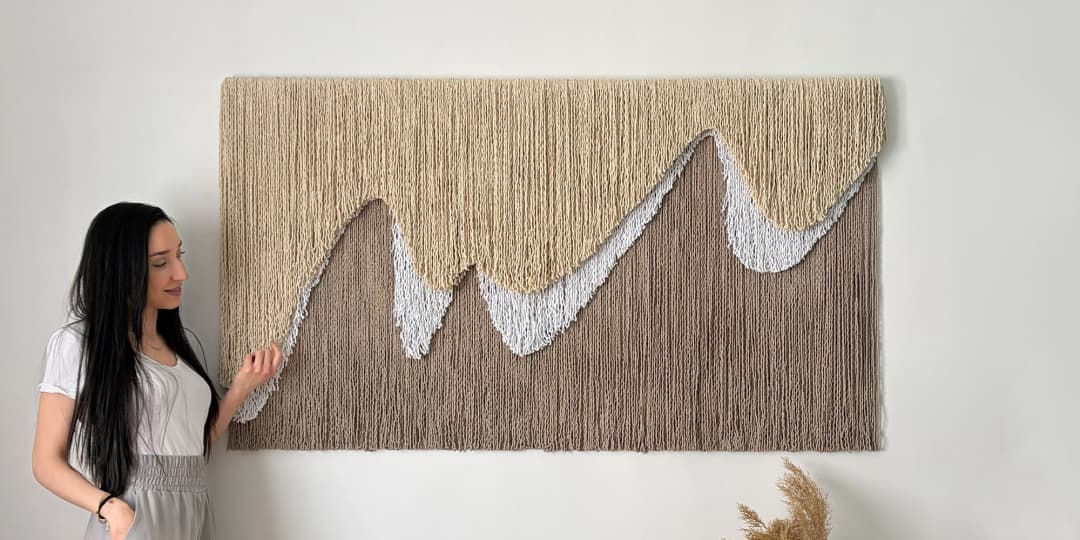
Over the past few years, the way we think about home decor and interior design has shifted around the world. People no longer want a printed poster or an ordinary painting on their walls; they want something textured, layered, and touchable. In this post we'll walk through what textured fiber wall art actually is, how it's made, how it differs from other handmade wall decor, and what it can bring to your space.
What Does Textured Fiber Wall Art Mean?
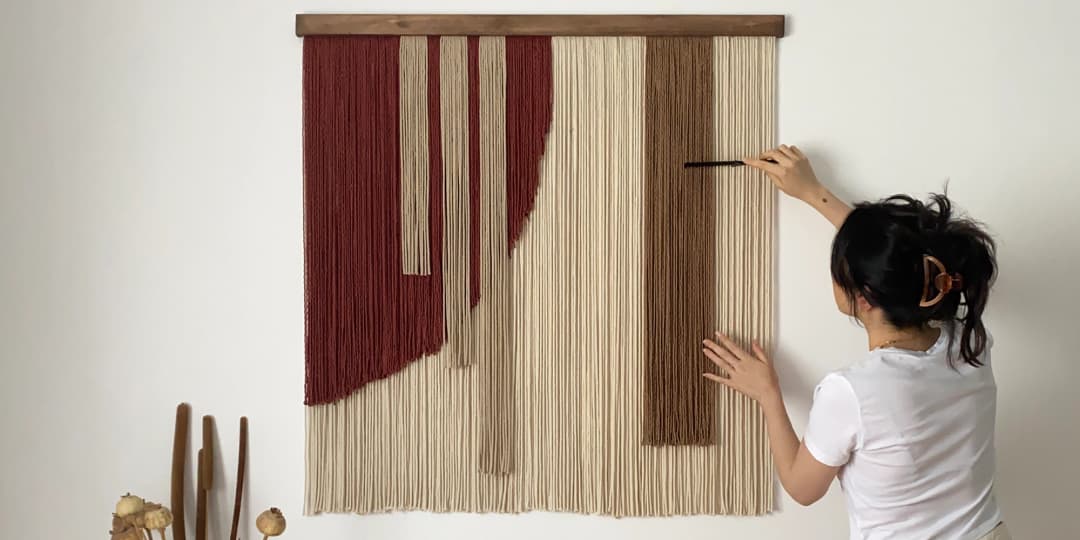
In the simplest terms, textured fiber wall art is a wall piece that isn't flat or single-layered — it carries a tactile texture and a real sense of depth you can feel with your fingertips. It's usually made from natural materials, most commonly cotton cord. Cords tied to a wooden dowel are cut, arranged, and layered one over another. The result is a three-dimensional surface that you can see from across the room and feel up close.
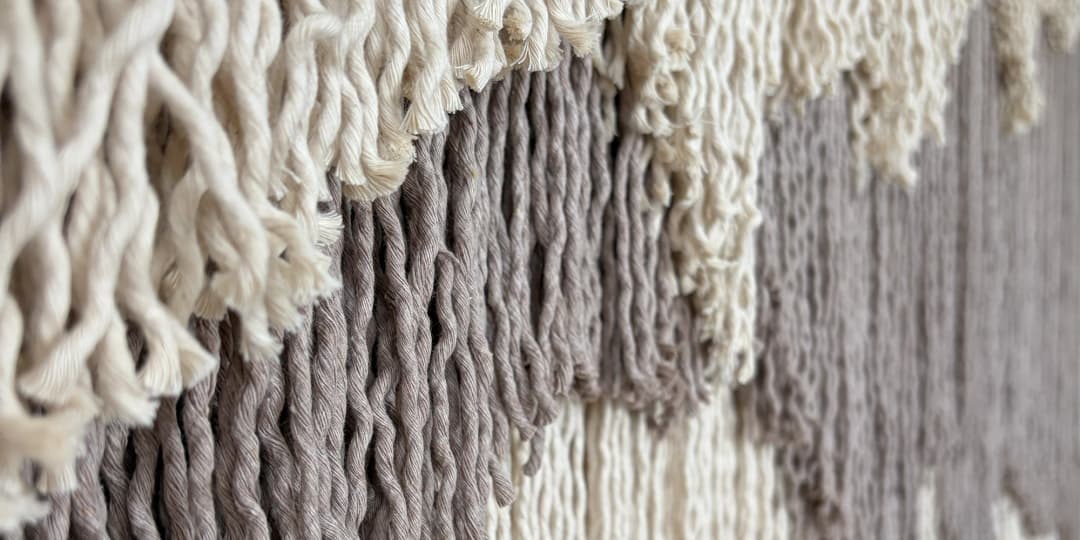
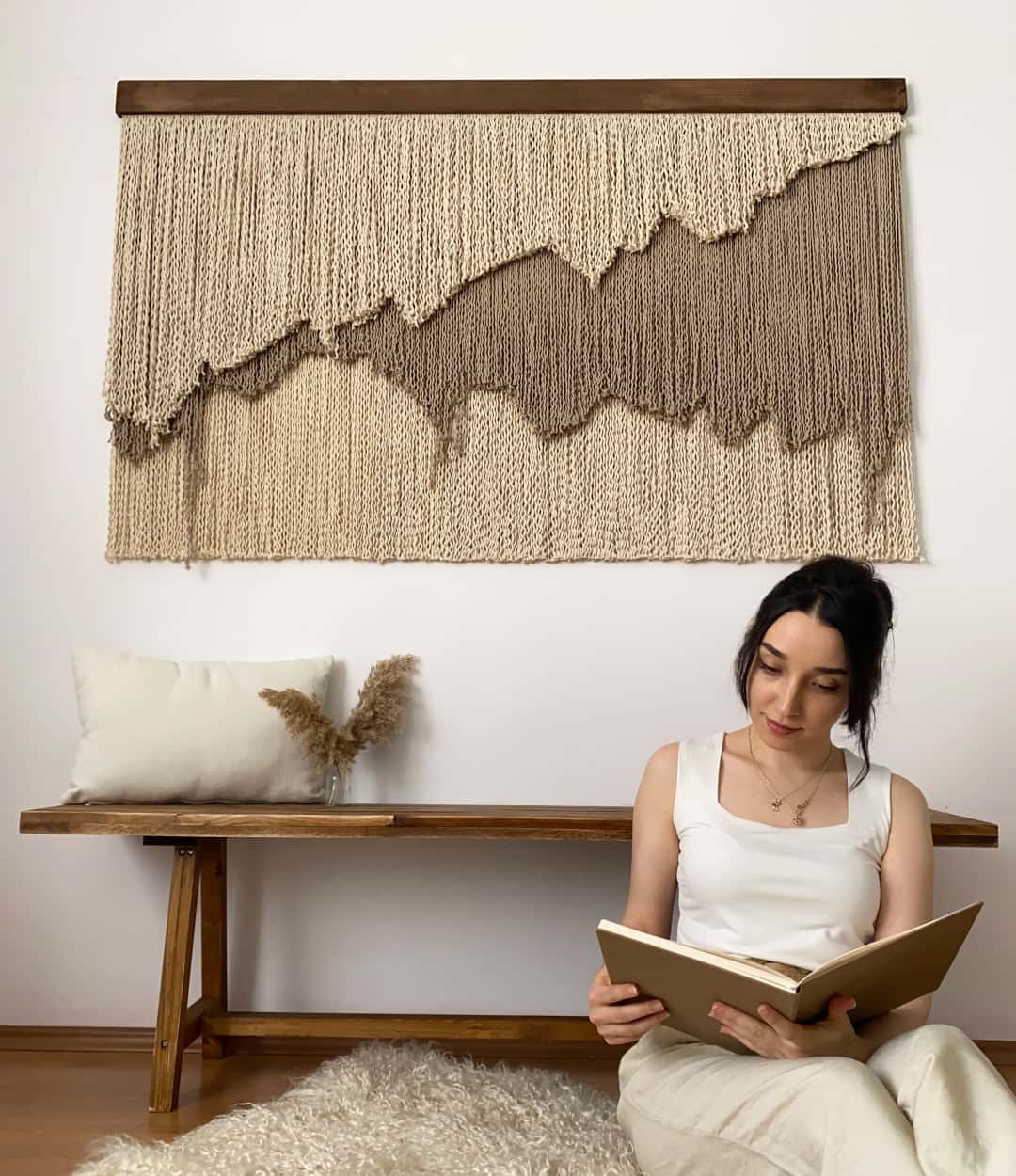
A printed painting is two-dimensional — it has height and width, but no depth. Textured fiber wall art adds a third dimension: depth. When light hits the surface from different angles, shadows form, and the character of the piece shifts throughout the day. That's why textured fiber wall art looks a little different every morning, even though nothing in the room has moved.
Why Not Just a Flat Painting or Print?
Here's the magic of texture: the human brain quickly files flat, uniform surfaces under 'familiar' and stops paying attention. But a textured, layered, uneven surface keeps the eye engaged. It's the same reason people in museums lean in closer to sculptures than to paintings, and instinctively want to touch them. Texture is a sensory experience as much as a visual one.
The 2026 decor trends share a common thread: cold, sharp-edged minimalism is giving way to warm, textured, characterful surfaces. Layered textures, natural materials, and handmade details are back in charge — and textured fiber wall art sits right at the heart of that movement.
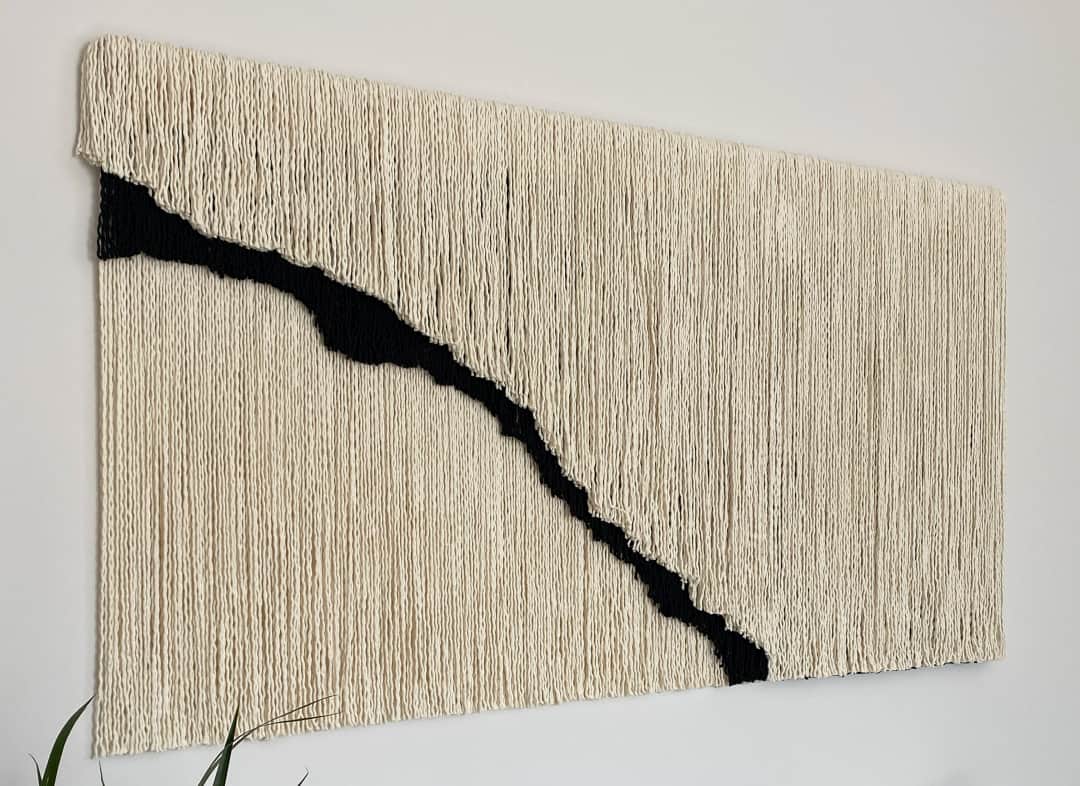
How Is It Made? A Handmade Process
A textured fiber artwork doesn't roll off a factory line. It's not something a machine can handle — every stage is done by hand.
First, the materials are prepared. 100% cotton cord is chosen in the desired colors. The piece's supporting dowel — usually solid varnished spruce — is cut and made ready. Then the cords are tied to the wooden dowel. But the work is far from over at this point.
When the cords are first tied, they tend to be tightly twisted — like a rope coiled on itself. Left that way, the wall would show through from behind and the piece would look messy. So each cord is unravelled, one by one. It's slow, patient work that can take hours. Once unravelled, the cotton cord becomes crimped, tangles into itself, and gains volume. Out of this comes a texture a flat surface could never give you.
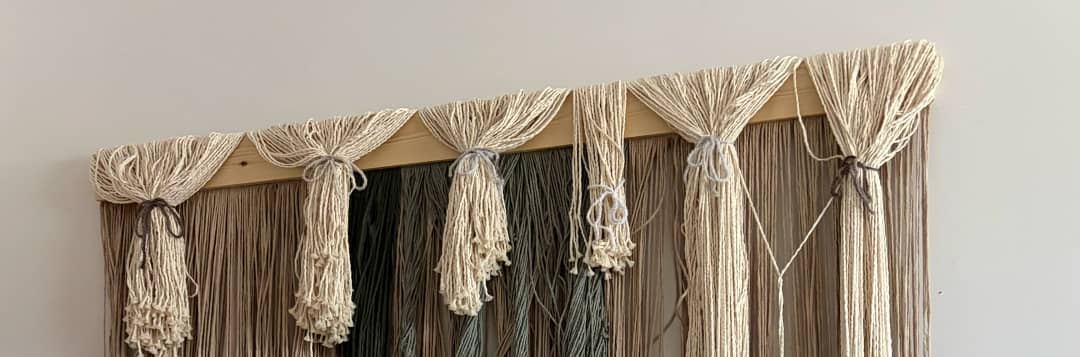
Then the layering begins. Pieces of different colors, lengths, and sizes are placed over one another. Some layers recede, others come forward. A composition takes shape. This stage is entirely a matter of artistry — which color goes where, how much of each layer shows, and the overall rhythm of the piece all come together in the maker's hands.
A single artwork takes 7 to 10 business days to make, depending on its size. It's labor-intensive and demands patience, but it results in a one-of-a-kind piece made just once.
What Materials Is It Made From?
A quality textured fiber artwork comes down to two core materials:
Natural Cotton Cord
The cord itself is the heart of the piece. It can be made with synthetic cords too, but the texture, the drape, and the way natural cotton ages simply can't be matched by any synthetic material. Natural cotton is also far more sustainable. Cotton cord doesn't stiffen or fade over time — instead, it softens and gains character.

Solid Wood Dowel
The wooden dowel you see at the top of the piece isn't just a handle; it's the skeleton of the artwork. A quality textured fiber piece uses solid wood — usually spruce or a similar sturdy timber. Engineered panels like MDF or particleboard, and painted surfaces, simply don't last. Solid wood gains color and grows more beautiful over the years; its natural lifespan is well over 20 years.

When these two materials come together, what you get isn't just 'a decorative object' — it's a piece that lives alongside you and becomes part of your home's character over time.
How Is It Different from Macramé, Weaving, and Knitting?
This is a common question, because they can look similar at a glance. But the techniques behind them are different:
Macramé: Cords are knotted into a pattern. Each knot has a name and a function of its own. The result is usually a symmetrical, repeating pattern.
Weaving: Cords are interlaced on a loom in a warp-and-weft structure — similar to the logic behind a rug or kilim.
Knitting: A technique of looping cord with a crochet hook or needles. You see it in things like sweaters and scarves.
Textured fiber wall art uses none of these techniques. Here the cords aren't knotted, woven, or knitted. They're cut, unravelled, and arranged freely, layer by layer. That opens up far more creative freedom — no obligation to be symmetrical, no repeating pattern, and every composition entirely its own.
Which Spaces Does It Suit?
The short answer: there's hardly a space textured fiber wall art doesn't suit. But let's look at where it shines the most:
Living Room
The most popular spot. The large empty wall behind the sofa, the wall facing the TV unit, or the space behind the dining table — these are ideal places for a textured piece. The artwork becomes the room's focal point, and guests start commenting on it the moment they sit down.
Bedroom
The wall above the bed is a dream location for textured fiber wall art. When the first thing you see on waking is a soft texture and a calming color palette, the day starts a little gentler. Thanks to the acoustic quality of the texture, the room's sound softens too.
Office and Study
Offices are increasingly starting to feel like homes — warm, characterful spaces that are genuinely pleasant to be in. A textured piece brings character to a sterile, impersonal office. It's especially striking as a video-call backdrop.
Hotels, Restaurants, and Corporate Spaces
Lobbies, waiting areas, and main restaurant walls tend to be large, empty, and a little cold. Large-scale textured fiber wall art brings warmth to these spaces through both its scale and its texture. And because every piece is one of a kind, it gives the space a distinctive identity.
What to Look for When Buying
There are a few things worth checking before you buy textured fiber wall art:
Material authenticity: Is it 100% cotton cord, or a polyester blend? The maker should state this clearly.
Wood quality: Solid wood or MDF? MDF is short-lived; it warps over time and deteriorates with moisture.
Who makes it: Mass-produced or made to order? How genuine is the handmade claim? A maker sharing studio photos and being transparent about the process is a good sign.
Choosing the size: Don't order without measuring your wall. A good rule of thumb: the piece should be about two-thirds the width of the furniture it hangs above (sofa, bed, console).
Care: Textured pieces are low-maintenance, but they need an occasional dusting with a soft, dry brush. They should never come into contact with water.
Textured Fiber Wall Art at justhang
justhang is a brand built entirely on this philosophy. In our studio in Cappadocia, every artwork is made one at a time, to order, by architect and designer Elif. We use 100% cotton cord and solid varnished spruce. There's no mass production and no stock — each piece is prepared with care, just for you.
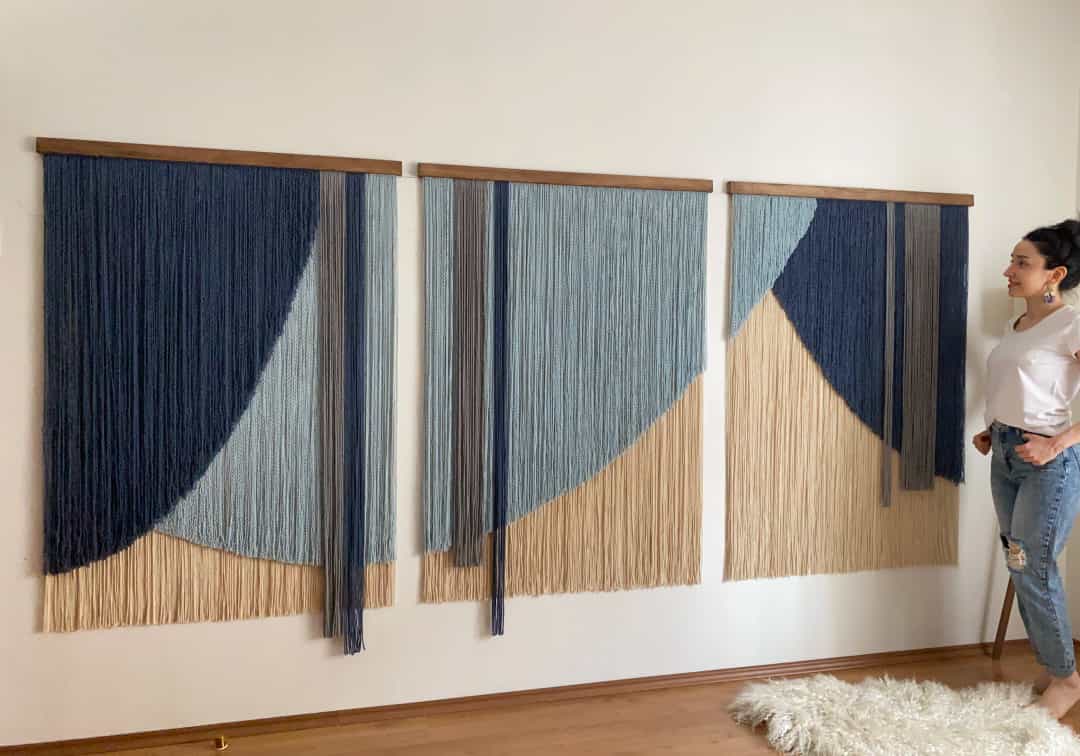
We have three collections: Balance — ordered forms and clean lines. Flow — dynamic, draping, moving compositions. Harmony — organic, natural forms that meet and merge. Each collection has its own characters and its own color palettes.
To find the piece that suits your wall, explore our collections, or request a custom artwork with your own size and color preferences. On every project, the size, color, and composition are planned specifically for you.
A Final Word
Textured fiber wall art is more than a decorative object. It's a fundamentally different experience from a flat painting or a printed poster — because it's sensory as much as visual, and alive as much as static. It changes with the light, the time of day, and the season. And most importantly: each piece is unique. There isn't one exactly like yours anywhere in the world, and there never will be.
Your wall doesn't have to be ordinary. Let it be a wall you'll want to reach out and touch.