

The most common question when ordering textured fiber wall art is: “What size should I get?”
The answer really comes down to two simple rules, both tied to the width of your furniture. Get the size wrong and one of two things happens: too small, and the piece gets lost on the wall; too large, and it overwhelms the space. Either way, you miss the striking effect you were after.
In this guide we'll help you choose the right size for your living room, bedroom, entryway, kitchen, and office — each with its own formula. We'll start with the two core rules, then give you practical example calculations and reference tables for every room, so the decision becomes an easy one.
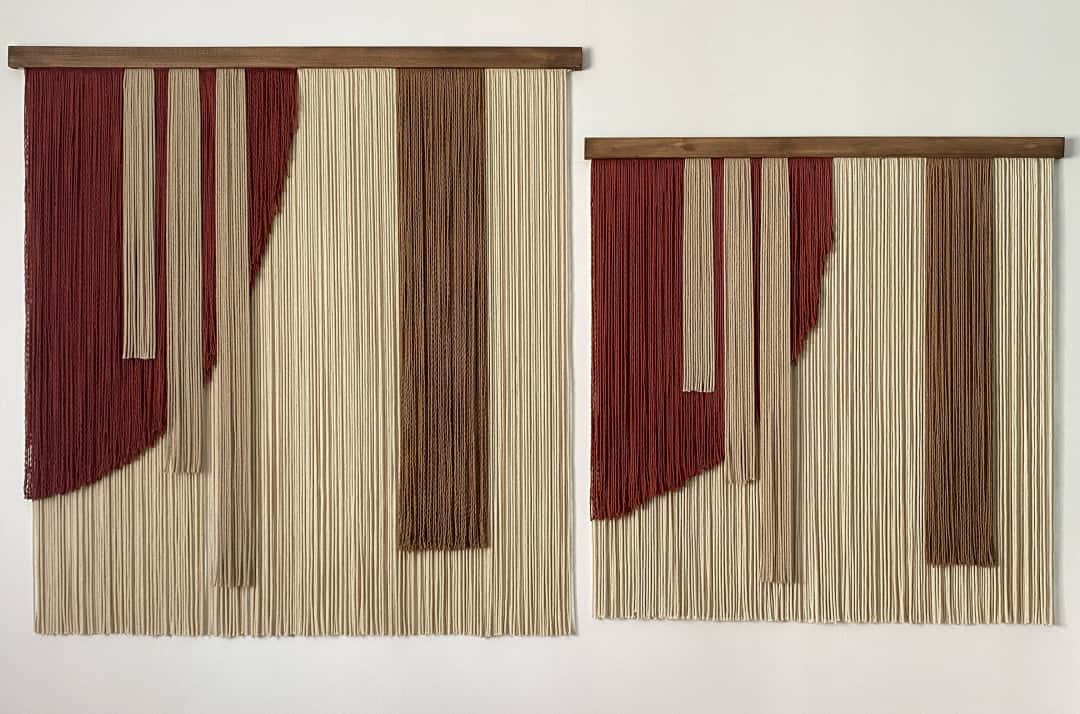
The Two Core Rules
Interior designers have used the same two rules to size wall art for centuries. You'll see them again and again throughout this guide:
| Rule 1 — Width | Piece width = furniture width × (0.66–0.75) |
| Rule 2 — Height | Center the piece 150 cm (59 in) from the floor |
In other words: the piece should be about two-thirds the width of the furniture beneath it, and sit centered at eye level. Beyond these two rules, everything else is detail.
Sizing for the Living Room
The living room is the largest, most-used space in the home. The wall art here needs to stay in proportion with both the wall and the furniture. Three placements are the most common: above the sofa, above a console, and on a large empty wall.
Above the Sofa — The Classic Spot
It's the first thing a guest notices walking into your living room. When the wall behind the sofa sits empty, the room feels unfinished; hang the right-sized piece and the room's identity settles into place.
Above-the-Sofa Formula Piece = sofa width × 2/3
Practical examples:
• 200 cm (79 in) three-seat sofa → 130–150 cm (51–59 in) piece
• 170 cm (67 in) large two-seat sofa → 110–125 cm (43–49 in) piece
• 150 cm (59 in) two-seat sofa → 100–115 cm (39–45 in) piece
Height: The bottom edge of the piece should sit 15–25 cm (6–10 in) above the top of the sofa. Less than 15 cm and it looks stuck to the sofa; more than 25 cm and it looks like it's floating. The center of the piece should be 150 cm (59 in) from the floor — that's eye level.
Above a Console
A console that separates the living room from the kitchen or dining area is another good spot. The same formula applies: console × 2/3. For a 120 cm (47 in) console, an 80–95 cm (31–37 in) piece works well.
A Large Empty Wall
When there's no furniture beneath the piece, the rule changes. Here you should choose a piece that's 60–75% of the wall width. For a 3-meter (10 ft) empty wall, for example, you'd want a piece 180–220 cm (71–87 in) wide.
Worth noting: When people ask “how big should it be?” they usually land about 30–40% too small. When in doubt, size up, not down. A small piece lost above large furniture is the single most common sizing mistake.
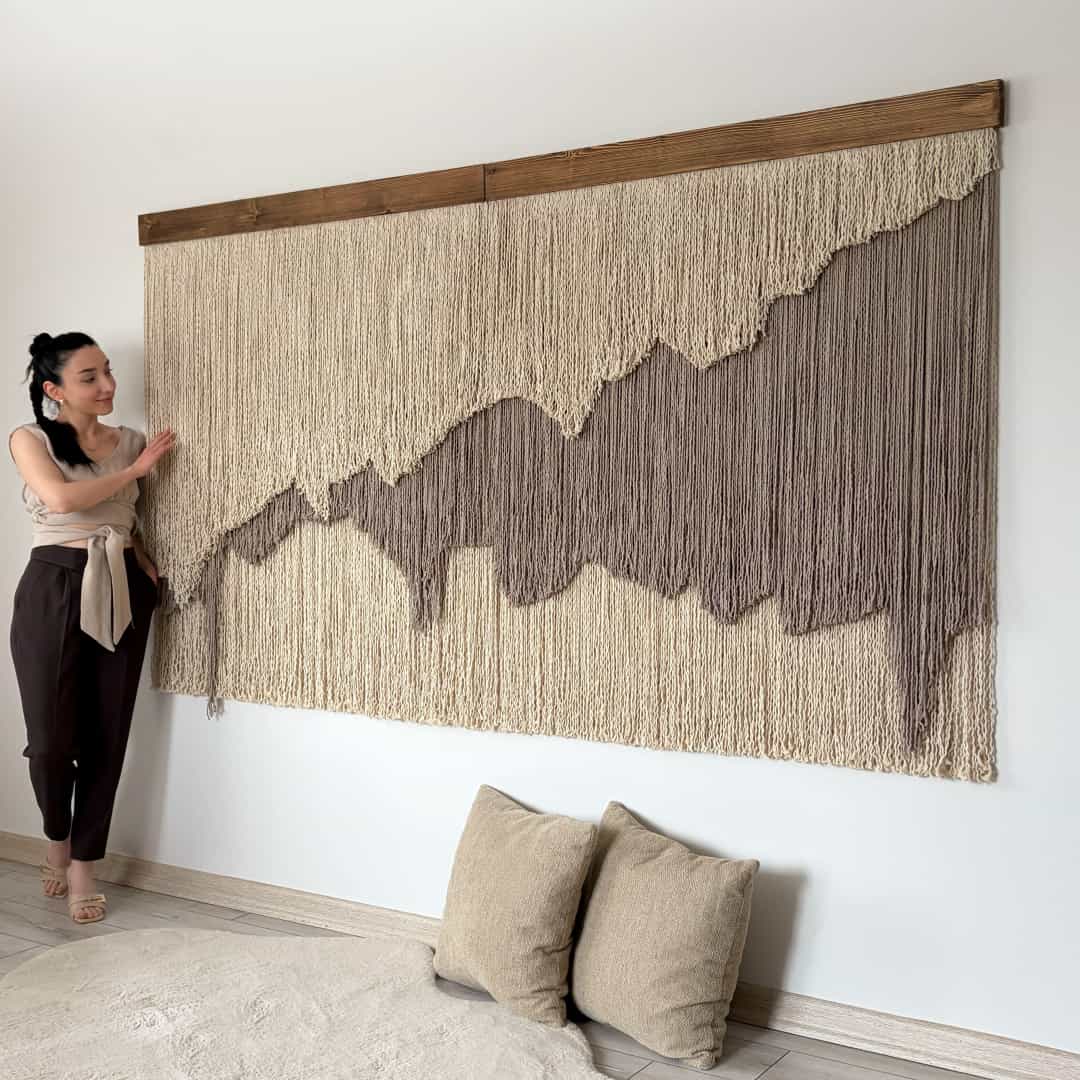
Sizing for the Bedroom
The bedroom is one of the spaces textured fiber wall art suits best. Two placements are the most common: above the headboard, and on the wall facing the bed.
Above the Headboard — The Room's Focal Point
It's the first thing your eye lands on when you walk in. Too small here and the piece looks lost; too large and it seems to crush the headboard. The right proportion is 60–80% of the bed width:
Headboard Formula Piece = bed width × 0.60–0.80
Reference by bed size:
| Bed Type | Bed Width | Piece Width |
| Single | 100 cm (39 in) | 65–75 cm (26–30 in) |
| Double | 160 cm (63 in) | 105–120 cm (41–47 in) |
| Queen | 180 cm (71 in) | 120–135 cm (47–53 in) |
| King | 200 cm (79 in) | 135–150 cm (53–59 in) |
Height: The bottom edge should start 20–30 cm (8–12 in) above the headboard (keep your eye level in mind relative to the headboard height). If there's no headboard, measure about 70 cm (28 in) up from the mattress surface.
The Wall Facing the Bed
This is the first surface your eyes meet when you wake up. Whether or not there's furniture on this wall directly affects the size. The above-console and empty-wall formulas we used for the living room apply here too.
Sizing for the Entryway and Hallway
The entryway is your home's first impression — the first wall a guest sees when they step inside. That makes it a great chance to express your home's character, but entryways come with space constraints, since they rarely have wide walls. A large piece won't fit a tight space, yet leaving it completely bare feels cold and impersonal.
Above the Console
An entryway usually starts with a console. The wall above it is the ideal spot.
• 90–100 cm (35–39 in) console → 60–75 cm (24–30 in) piece
• 120 cm (47 in) console → 75–90 cm (30–35 in) piece
If there's already a mirror above the console, placing the piece on a different wall rather than the same one gives a more balanced result. Two large visual elements competing on the same wall split the visual weight.
The Hallway Wall
Narrow hallway (90–100 cm / 35–39 in wide): A vertical-format piece emphasizes the length of the hallway. Horizontal pieces look cramped in a narrow hallway.
Wide hallway (120+ cm / 47+ in): In long hallways you can create a set of 2–3 smaller pieces (with an equal 8–12 cm / 3–5 in gap between each).
Sizing for the Kitchen and Dining Area
The kitchen is a tricky room for textured fiber wall art. Grease and moisture damage cotton cord over the long term — but open-plan kitchens are increasingly common, and the line between kitchen and dining area is blurring. Choose the right placement and textured fiber wall art can add texture as a focal point in the kitchen too.
Above the Dining Table
This is the spot furthest from the stove. The wall your eye reaches during a meal adds character to the atmosphere where you eat. A piece about two-thirds the width of the table creates visual unity with it:
• 160–180 cm (63–71 in) dining table → 105–120 cm (41–47 in) piece
• If your table sits parallel against the wall, align the piece to the center of the wall.
Above a Sideboard
• 160–200 cm (63–79 in) sideboard → 105–135 cm (41–53 in) piece
• A horizontal-format piece pairs better with a horizontal sideboard.
Moisture & grease warning: Cotton cord can yellow or hold odors over the long term in high humidity or grease vapor. Hang pieces at least 2 meters (6.5 ft) from the stove, sink, and dishwasher. In an open kitchen, choose the dining side rather than the cooking side. Even with an effective range hood, grease particles released during cooking work into the cord's texture over time. We don't recommend hanging directly above the stove, behind the sink, or around the dishwasher.
Sizing for the Office and Study
Hybrid work has entered our lives and made home offices bigger. The wall behind your desk is no longer just a background; it's part of the professional identity others see on video calls. The right piece both motivates you and helps you look considered on camera.
Behind-the-Desk Formula Piece = desk width × 2/3
Example calculations:
• 160 cm (63 in) desk → 105–120 cm (41–47 in) piece
• 140 cm (55 in) desk → 95–105 cm (37–41 in) piece
• 120 cm (47 in) desk → 80–90 cm (31–35 in) piece
Height: In a study, the height reference is your seated position. The bottom edge of the piece should be 25–35 cm (10–14 in) above the desk. When you sit down it should land right at eye level — not standing height.
Video-Call Tip
On Zoom, Teams, or Google Meet, the center of the piece should sit in the top third of the frame the camera captures — the area just behind your head. Not too low, not too high. This creates a professional backdrop that doesn't distract. Set the camera angle to the piece's level for the best result.
Alternative Placements
Beside or facing a bookshelf: A soft texture provides contrast to the color-clutter of books and creates balance. Since a bookshelf already carries visual density, a simpler palette works better for the piece.
The side wall beside your desk: The wall to your right or left when seated. It can be a spot that rests the eye without distracting — especially useful for people who work long hours looking at a screen. Apply the desk formula based on your wall width.
Quick Selection Table
| Where | Furniture | Furniture Width | Recommended Piece Width |
| Living room | Three-seat sofa | 200–230 cm (79–91 in) | 135–160 cm (53–63 in) |
| Living room | Two-seat sofa | 150–170 cm (59–67 in) | 100–120 cm (39–47 in) |
| Living room | Armchair | 80–90 cm (31–35 in) | 55–65 cm (22–26 in) |
| Living room | Console | 100–120 cm (39–47 in) | 65–85 cm (26–33 in) |
| Bedroom | King bed | 200 cm (79 in) | 135–150 cm (53–59 in) |
| Bedroom | Queen bed | 180 cm (71 in) | 120–135 cm (47–53 in) |
| Bedroom | Double bed | 160 cm (63 in) | 105–120 cm (41–47 in) |
| Bedroom | Single bed | 100 cm (39 in) | 65–75 cm (26–30 in) |
| Entryway | Console | 100–120 cm (39–47 in) | 65–80 cm (26–31 in) |
| Kitchen | Dining table | 160–180 cm (63–71 in) | 105–120 cm (41–47 in) |
| Kitchen | Sideboard | 160–200 cm (63–79 in) | 105–135 cm (41–53 in) |
| Office | Desk | 120–160 cm (47–63 in) | 80–120 cm (31–47 in) |
Frequently Asked Questions
How high should wall art be hung?
The center of the piece should be 150 cm (59 in) from the floor. That's average adult eye level and the international gallery standard. If your ceiling is very high (over 3 m / 10 ft), you can go up to 155–160 cm (61–63 in), but 150 cm is a safe starting point. In homes with low ceilings (under 2.5 m / 8 ft), dropping to 145 cm (57 in) can give a more balanced result.
How large should the piece above my sofa be?
The piece should be between two-thirds and three-quarters of the sofa width. For a 200 cm (79 in) sofa, for example, a piece of 135–150 cm (53–59 in) is ideal. This ratio is based on the century-old “rule of two-thirds” design principle. On walls with a sofa beneath, this rule gives the right answer almost every time.
How much space should there be between the headboard and the piece?
Leave 20–30 cm (8–12 in). Less than 20 cm and the piece looks “stuck” to the bed; more than 30 cm and it looks like it's “floating.” For beds without a headboard, start about 70 cm (28 in) up from the mattress surface.
Can I hang textured fiber wall art in the kitchen?
We don't recommend hanging it right next to the stove or sink. High humidity and grease vapor damage cotton cord over time. But in an open kitchen, a spot at least 2 meters (6.5 ft) from the stove — like above the dining table or a sideboard — can work.
Still Can't Decide?
If you've read this guide and you're still unsure about size:
You can send us a photo of your wall. Take a straight-on shot showing the side and front edges of the furniture and the space up to the ceiling. Include the width of the furniture and the wall along with the photo, and send it to [email protected]. Our designer Elif will get back to you as soon as possible with a size recommendation tailored to you. This service is free and comes with no obligation to buy.